Earthware
EarthWare is a collection of biomaterials based cutlery - designed through the lens of nature, biology, ecology and sustainability. This is designed directly with nature as a building tool for industrial design. Maybe you think, “It’s just one spoon,” but multiplied by millions upon millions, those plastic utensils are terrible for the environment. The idea of working with these materials arises from the need to explore sustainable alternatives to conventional plastics, addressing environmental concerns related to waste and non-biodegradability. These biomaterials combine traditional ingredients like clay and gelatin with modern additives like glycerine and calcium carbonate, offering a bridge between ancient practices and innovative material science. The interest lies in their renewable origin, low toxicity, and potential for reduced environmental impact compared to synthetic polymers, perfect for cutlery.
Project: Biomaterial
Timeline: Aug-Dec 2024
Scope: Biomaterial Exploration
with Avocado Dye
AgarAgar vs Gelatin
Agar-agar: When combined with glycerine and water, agar tends to produce a more rigid material but can also become brittle depending on the ratio of glycerine. The glycerine acts as a plasticizer, softening the agar to make it less brittle.
Gelatin: When mixed with glycerine and water, gelatin produces a more flexible material because gelatin is naturally elastic, and the glycerine enhances this flexibility. The combination can result in a material that stretches without breaking.
Gelatin holds itself better than agar does in the mould.
Agar also tends to shrink unlike gelatin.
Blend of Gelatin+Clay
Hardening the Material


A breakdown of each component
Contribution of Materials
Final Material with Design
THE MAKING PROCESS


Designing for travel sustainability
Why Bioplastic for cutlery and utensils?
The average airline passenger leaves behind around 3 pounds of garbage per flight, and a substantial portion of that comes from the packaging of inflight meals.

The Gelatin Base
With a profound love for clay

The dyes were made with Avocado pits, dried hibiscus flower, Orange peels by heating them at low temperature for 45 minutes to 1 hour.
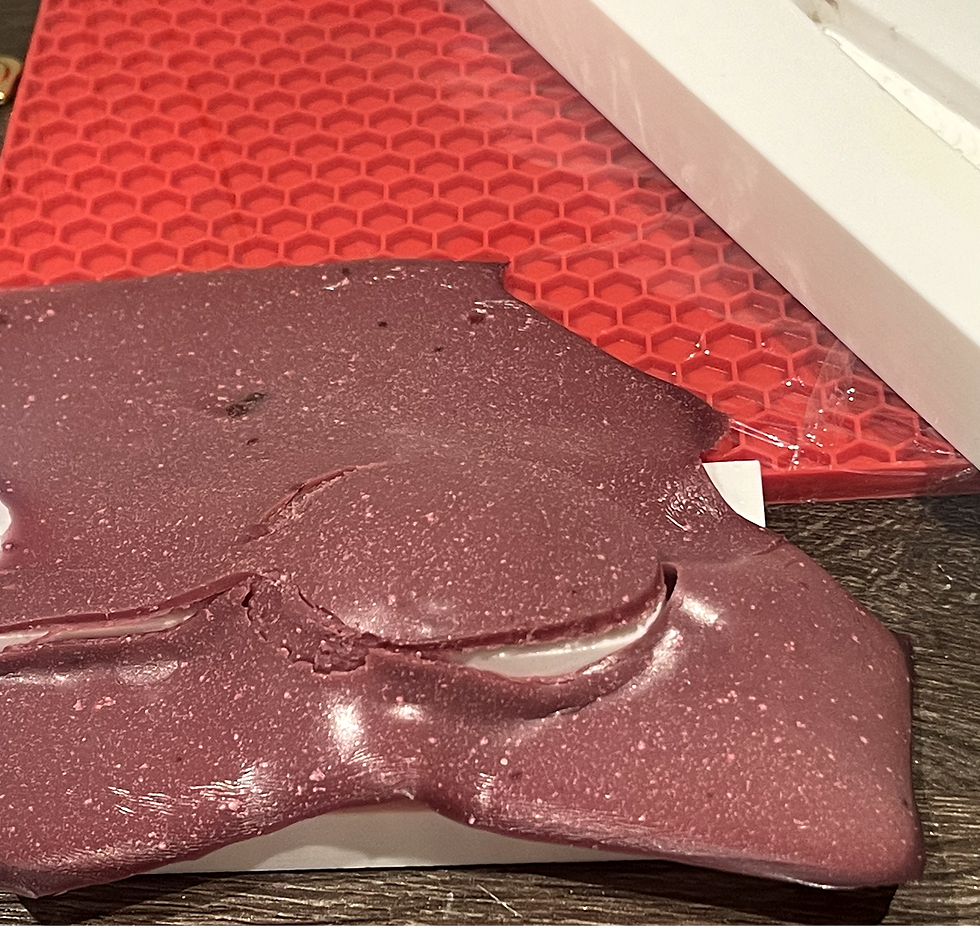

SUCCESS & FAILURES
A hundred samples later...

Experimenting Colors
Creating Dyes

How it takes shape
Material Behavior
Making a sheet of the material and trying to mold it on the positive mold.
How it takes shape
Final Cutlery Design
Wider surface area for the material to stay in shape


ONE SPOON AT A TIME
Managing Waste with Design
